Foundation (8th/9th/10th Std) New Batch Started From 15th June 2026
|
NEET Long Term Batch Starting From 30th June 2026
|
DCET Long Term Batch Starting From 5th July 2026
|
Foundation (8th/9th/10th Std) New Batch Started From 15th June 2026
|
NEET Long Term Batch Starting From 30th June 2026
|
DCET Long Term Batch Starting From 5th July 2026

IIT-JEE
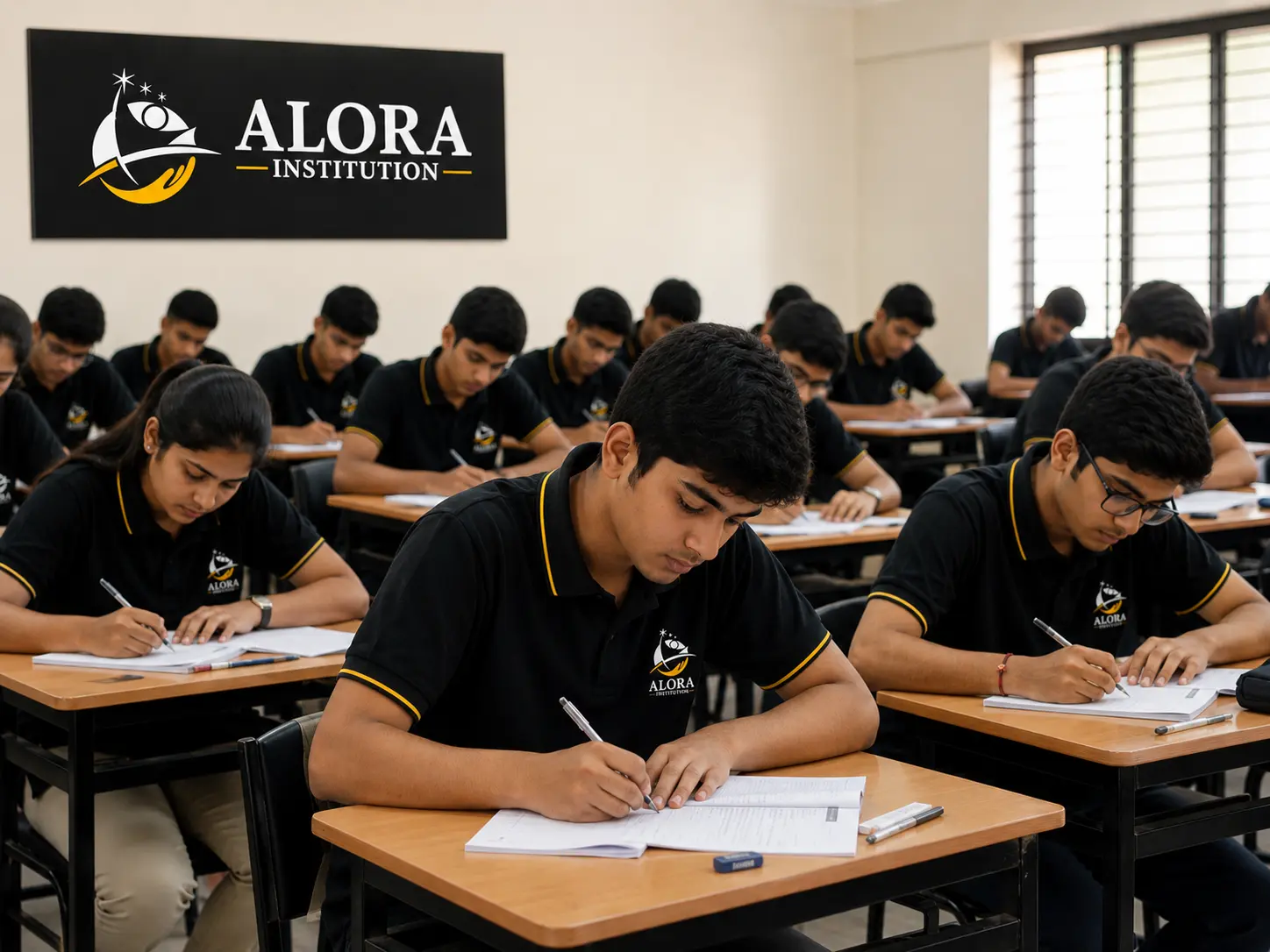
The JEE (Joint Entrance Examination) is a highly competitive entrance exam in India conducted for admission to undergraduate engineering programs in prestigious institutions, such as the Indian Institutes of Technology (IITs), the National Institutes of Technology (NITs), and other renowned engineering colleges across the country. JEE is divided into two levels: JEE Main and JEE Advanced.
What will you learn? and How?
Mathematics :
Mathematics is a key subject in the JEE course. It covers a wide range of topics, including algebra, calculus, trigonometry, coordinate geometry, vectors, statistics, and probability. The focus is on developing problem-solving skills and mathematical reasoning.
Physics :
Physics is another major subject in the JEE course. It covers fundamental concepts and principles of classical mechanics, optics, electromagnetism, thermodynamics, modern physics, and more. The emphasis is on understanding the application of these concepts in solving complex problems.
Chemistry :
The JEE course includes both organic and inorganic chemistry, as well as physical chemistry. It covers topics such as chemical bonding, periodic properties, thermodynamics, states of matter, coordination compounds, organic compounds, biomolecules, and environmental chemistry. The aim is to develop a strong foundation in chemical principles and their applications.
Problem-Solving Skills :
The JEE course focuses on developing problem-solving skills. Students will be trained to solve a wide variety of complex problems that require analytical thinking, logical reasoning, and application of concepts. Practice and exposure to different types of problems are crucial for success in the JEE exam.
Mock Tests and Practice Papers :
As part of the JEE course, students are encouraged to take mock tests and solve practice papers regularly. These simulate the actual exam environment and help students assess their readiness, identify areas for improvement, and manage time effectively.
Motivation and Emotional Support :
JEE preparation can be intense and we often provide motivational sessions and emotional support to help students stay focused, motivated, and confident during their preparation journey.
Test-Taking Strategies :
Alongside subject knowledge, the JEE course covers test-taking strategies, time management techniques, and tips for approaching different question types. These strategies help students optimize their performance during the exam.
Advanced Topics :
For students aspiring to clear JEE Advanced, which is the next level of the examination for admission to the IITs, the course may include additional advanced topics in mathematics, physics, and chemistry. These topics often require a deeper understanding and may involve more complex problem-solving.
Personalized Guidance :
Alora offers personalized guidance to students, including individual counseling sessions, performance analysis, and guidance on exam strategy. This helps students identify their strengths and weaknesses, set goals, and work on areas that require improvement.
Classroom Lectures and Study Material :
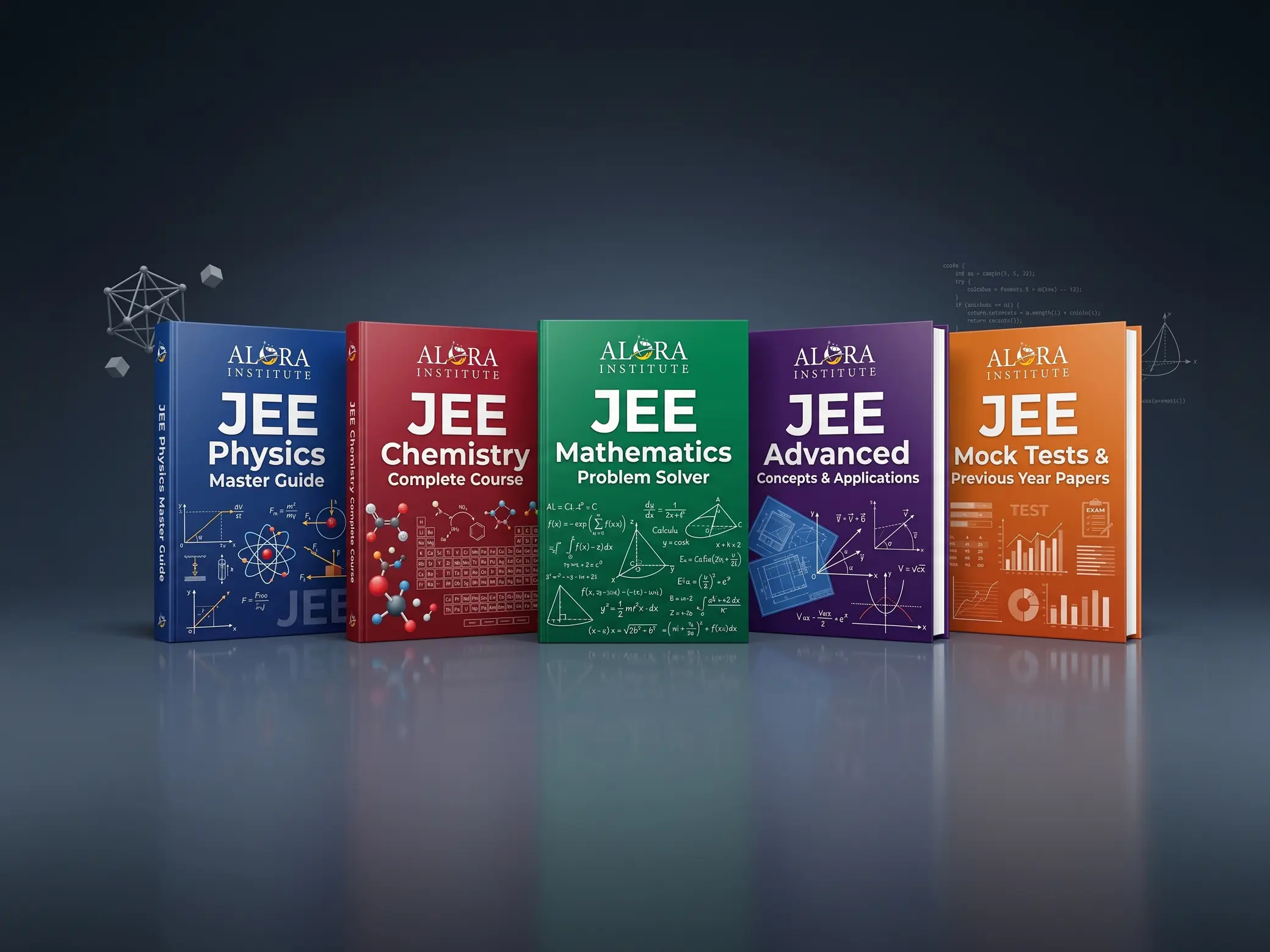
Students attend regular lectures delivered by professors and subject matter experts. These lectures cover the theoretical aspects of the subjects included in the JEE syllabus and specialized study materials are provided designed specifically for JEE preparation. These resources provide comprehensive coverage of the syllabus, including explanations, examples, practice questions, and previous years' question papers.
Discover your potential.
Build your future with Alora Institute.
We recognize that every student’s journey is unique. Through a blend of highly experienced faculty, innovative study materials, and a deeply personalized approach to mentorship, Alora Institute provides an ecosystem where students are supported, challenged, and inspired to achieve their ultimate academic goals.

JEE Examination & Preparation FAQs
General Exam Information
JEE Main is the screening exam conducted for admission to NITs, IIITs, and other Centrally Funded Technical Institutions (CFTIs). It also serves as the qualifying exam for JEE Advanced. JEE Advanced is the second phase, only open to the top 2.5 lakh rankers of JEE Main, and is the sole gateway for admission to the prestigious Indian Institutes of Technology (IITs).
A candidate can attempt JEE Main for three consecutive years (starting from the year they pass their Class 12 board exams). Since JEE Main is held multiple times a year, all sessions in a single year count as one year of attempt. For JEE Advanced, a candidate can attempt it a maximum of two times in two consecutive years.
JEE Main (Paper 1 for B.E./B.Tech) is a computer-based test consisting of Mathematics, Physics, and Chemistry. As per the latest pattern, each subject has exactly 25 questions: 20 Multiple Choice Questions (MCQs) and 5 Numerical Value Questions (all compulsory). This makes a total of 75 questions to be attempted across all three subjects. The total marks are 300.
Preparation Strategy
They are exceptionally important. Solving previous year question papers helps you understand the exam pattern, weightage of topics, and difficulty level. Mock tests help build stamina for the 3-hour exam, improve time management, and identify weak areas that need revision.
While it is possible to crack JEE through rigorous self-study, a structured coaching program provides highly curated study material, expert guidance, doubt-solving sessions, and a competitive environment. Coaching helps streamline your preparation and keeps you strictly aligned with the JEE syllabus.
Both are equally important. Historically, the weightage in JEE Main and Advanced is divided roughly 45%-55% between Class 11 and Class 12 syllabi. You cannot afford to neglect Class 11, as many Class 12 topics require a strong foundation in Class 11 concepts (e.g., Mechanics in Physics, General Organic Chemistry).